A short treatise on motor oils in general..
Viscosity
Viscosity is a variable quantity that depends on temperature. During the operation of an automotive engine, operational temperatures also change. To ensure effective lubrication, the viscosity of the oil should change as little as possible with temperature. This dependence is defined by the so-called viscosity index. The higher this index, the lower the dependence of viscosity on temperature changes. The viscosity properties of motor oils are characterized using the SAE specification (Society of Automotive Engineers, USA). This standard classifies oils into 6 winter grades marked by a number and “W” (from English Winter) and 5 summer grades marked by a number.
Winter grades: 0W, 5W, 10W, 15W, 20W, 25W (-35°C, -30°C, -25°C, -20°C, -15°C, -10°C)
Summer grades: 20, 30, 40, 50, 60 (20°C, 30°C, 40°C, 50°C, 60°C)
The winter designation value indicates the behavior of the oil at low temperatures (e.g., SAE 15W oil has a pumpability limit of -25 °C).
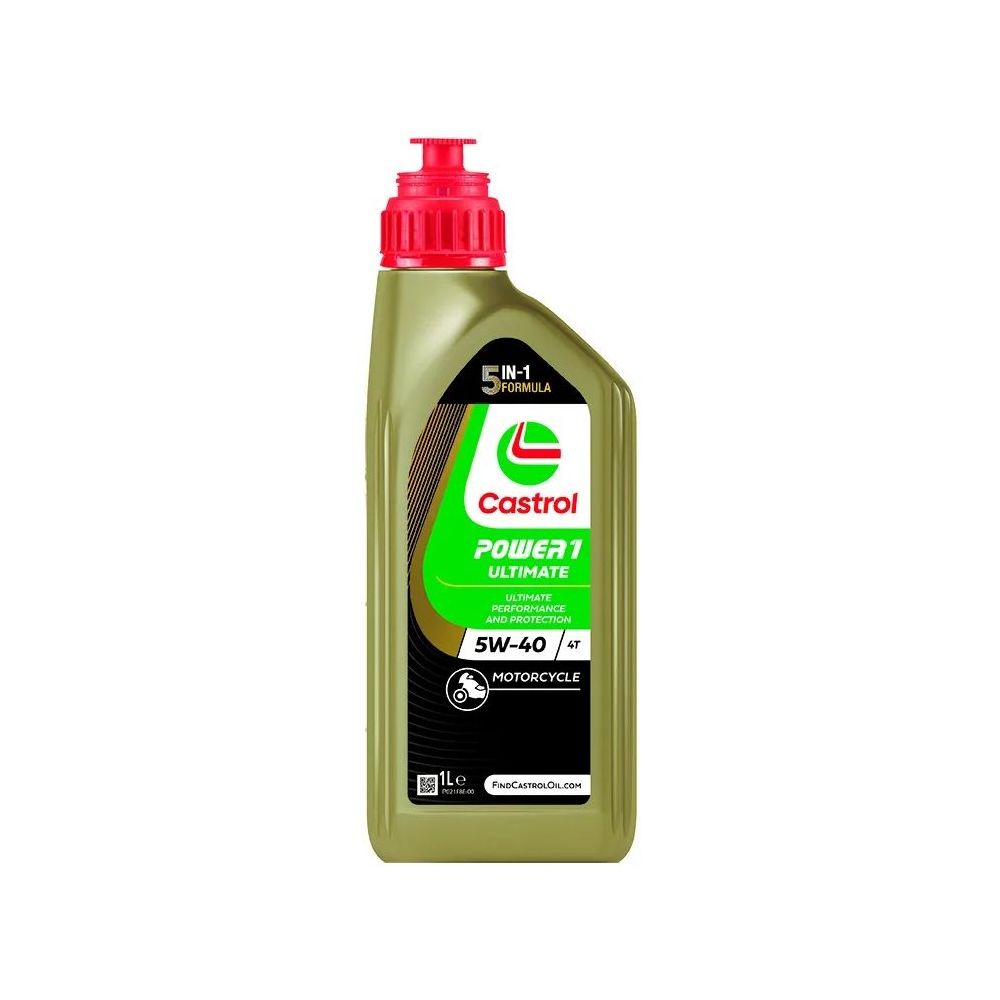
The summer designation value indicates the use of the oil at summer temperatures. If only one grade is used in the designation, it means that the oil is monograde (either summer or winter). When a combination of summer and winter grades is used (e.g., 5W-40), it refers to multigrade oil or all-season oil. Currently, multigrade motor oils are used almost exclusively.
Performance Categories
They characterize the immediate and long-term properties of motor oil under various forms of operational load. Various properties are evaluated, such as oxidative stability, volatility, wear protection, sludge formation, corrosion resistance, fuel economy, etc.
The performance categories of motor oils are designated by the following standards:
API classification (American Petroleum Institute, USA)
ACEA classification (Association des Constructeurs Européens d'Automobile, EU)
Manufacturer-specific standards for engine and vehicle manufacturers (VW, MB, MAN, VOLVO, TATRA)
MIL-L classification (U.S. military standards)
Other classifications (e.g., ILSAC)
Currently, the most significant specifications are API, ACEA, and manufacturer-specific standards for engine and vehicle manufacturers. The CCMC classification is now outdated and is only mentioned temporarily.
API Classification
According to this standard, motor oils are distinguished by their application for gasoline (spark-ignition) engines, marked by the letter “S” (from English Service), and for diesel (compression-ignition) engines, marked by the letter “C” (from English Commercial). Most oils are suitable for both types of engines and are then marked with a combination of both letters, e.g., SL/CF.
Performance Classes for Spark-Ignition Engines
SA - Oils without additives for engines operating under mild conditions with low loads, manufactured between 1940 – 1950.
SB - Oils with additives against sludge formation for engines manufactured between 1951 – 1963.
SC - Oils with additives against sludge formation and low-temperature deposits for engines manufactured between 1964 – 1967.
SD - Additized oils with detergent and dispersant additives for engines manufactured between 1968 – 1971.
SE - Oils for very stressed engines manufactured between 1971 – 1979.
SF - Oils for highly stressed engines manufactured between 1980 – 1988.
SG - Oils for engines manufactured between 1988 – 1993, meeting the strictest requirements for minimizing wear and sludge formation.
SH - Oils with the same properties as SG but tested according to more demanding standards. Intended for engines manufactured in 1996 and older.
SJ - Oil for engines manufactured in 2001 and older.
SL - Oils that exceed API SJ specifications.orové bez filtru pevných částic a pro některé motory vybavené recirkulací výfukových plynů, nebo systémem SCR, podle doporučení výrobce motoru.
E9 - Oleje poskytující vynikající ochranu pro motory pracující za těžkých podmínek, včetně pro dlouhé výměnné intervaly a provoz při nízkých teplotách. Doporučeno pro vysokovýkonné motory, které splňují emisní limity Euro 1, Euro 2, Euro 3 a Euro 4. Jsou vhodné pro motory bez filtru pevných částic a pro motory vybavené recirkulací výfukových plynů, nebo systémem SCR, podle doporučení výrobce motoru.
engines without particle filters and for most engines equipped with exhaust gas recirculation or SCR system, according to the manufacturer's recommendations.
Note: Categories A2 and B2 are not included in the current edition. However, they remain valid in the last version, as long as they are recommended by car manufacturers in service books.
Categories E3 and E5 are replaced by categories E6 and E7.
Explanations:
DPF (Diesel Particulate Filter) - particulate filter
TWC (Three Way Catalyst) - three-way catalyst
EGR (Exhaust Gas Recirculation) - exhaust gas recirculation
SCR (Selective Catalytic Reduction) - selective catalytic reduction of NOx: adjustment of exhaust gas composition with urea (AdBlue agent = 32.5% aqueous solution of urea)
Standards of car and engine manufacturers
Many car and engine manufacturers require motor oils to meet additional requirements not included in the methodology of previous classifications.
How to correctly choose motor oil?
1. The first rule when choosing motor oil is to follow the recommendations of the motorcycle manufacturer, contained in the manual of each vehicle. Only the manufacturer of the engine (vehicle) can responsibly state which oil can be used. Practically no manufacturer recommends a specific brand of oil (as this contravenes competition laws in the European Union). Manufacturers (of vehicles) recommend oils according to so-called performance specifications, e.g. API SH/CD, ACEA A3, VW 505.00, MB 229.1 and viscosity specifications of SAE, e.g. 15W-40, 10W-40. For such recommended oils, the replacement intervals are then specified.
2. For oils of the same performance specification, the same replacement interval is recommended.
3. If you do not have the vehicle manual, ask the manufacturer. Remember, the vehicle manufacturer does not recommend a brand of oil, but only the performance and viscosity specification.
4. If the oil meets the performance and viscosity specification (or a higher specification), it can be used. A higher performance level is not a problem, but it is usually more expensive and does not bring much benefit.
5. If you are changing oil of low performance specification (M5AD, M6AD) for a new oil with high performance, shorten the replacement interval for the first change (there will be a flushing of deposits).
6. Do not mix mineral oils (SAE 15W-40, 15W-50, 20W-30, 40) with synthetic oils (SAE 0W and 5W-30, 40, 50).





 Motorcycle
 On the road


 Apparel
 Secure Payments
 Shipping to the EU for €5.99 or free on orders over €99.
 Need advice? Call us (English, Czech) or write to us (in your language).